

Qualifications of an Electrician uk
An electrician in the United Kingdom is an expert tradesperson working with electrical, communication and lighting systems. These people install, repair, and maintain lighting systems in commercial and residential buildings.
An electrician is a good career option for anyone looking for a flexible and rewarding job. It offers a wide variety of career advancement opportunities as well as an excellent salary.
electricians in the uk of an electrician in the United Kingdom are a significant part of their ability to perform their duties, as they require to be extremely competent in order to ensure the safety and effectiveness of their work. This can be accomplished by many different avenues that include formal education and training, as well as work experience.
The qualifications of electricians are frequently updated in accordance with the latest standards and practices in the industry. It is therefore crucial to keep your credentials current. This is particularly important for electricians who need to keep up with the National Electrical Code which changes every three years.
To become an electrician, it is best to acquire City & Guilds certifications. These courses will help you improve your skills and knowledge across a variety of disciplines such as portable appliance testing to installing solar panels.
If you're looking to take their career may also consider an apprenticeship, which will involve working for an employer for a specified period of time in exchange to a wage. It can last from a few weeks to a long time and will enable you to obtain the NVQ requirements required to become an electrician in the United Kingdom.
An apprenticeship is an excellent way for you to get started in the field. It gives you the chance to learn from experienced electricians, and experience what it's like being an electrician prior to beginning your journey towards NVQ. The course itself is easy and can be completed within a few months to a couple of years.
Following your training, you can go on to earn an NVQ diploma for electrotechnical systems. This will provide you with an in-depth knowledge of the field and will be more useful for those who are looking to specialize in a specific area of the trade.
uk electrician can be an extended and difficult process and can take several years to complete but once you have achieved the qualification, you will be a fully licensed electrician uk and will have opened up a whole new set of career opportunities. This is an excellent opportunity to kickstart your professional career in the field and earn an impressive income as you work on your own projects or for an established electrician.
Training
If you're looking for an apprenticeship or training to become an electrician professionally There are many avenues to start. These include NVQ qualifications Level 2 and 3 electrical diplomas and degree-level apprenticeships.
Regardless of your route to becoming an electrician you'll need a minimum of qualifications, such as GCSEs (or equivalent) in English and maths. It is also possible to have work experience that is relevant. This can be accomplished by working in a variety of positions, including on weekends or holidays for an employer who is active in the industry.
For many people, an apprenticeship is the most popular method to start a career as electrician. This is because you'll receive on-the-job training and earn a wage while you learn your trade.
To start an apprenticeship in the UK, you will need an City & Guilds qualification. However, some employers will accept qualifications from other governing agencies. Apprenticeships generally last between 2 and 4 years. You must earn at least the minimum wage.
When you've completed your apprenticeship, you can begin your studies for an NVQ electrical installation. electricians uk will teach you the fundamentals needed to begin your career in electrical installation. The NVQs are accredited by City & Guilds and EAL, so they are widely accepted.
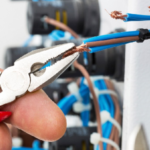
If you prefer, you can enroll in a course at a vocational or trade school college. These institutions will give you the theoretical and practical skills you require to become a successful professional in this field. You can also test your skills in a secure setting by working on real-world projects.
This course will teach you the basics of electrical engineering, and how to safely build and install electrics. You will also be taught the fundamentals of electrical equipment and systems so that you can keep them in good condition.
There is a shortage of qualified electricians in the UK. This is the ideal time to begin your career. This is due to the fact that demand for electricians is at an all-time high and employers are able to pay a higher salary than they did before.
Work Experience
Electricians install, repair and maintain electrical equipment in industrial, commercial and domestic settings. They also work on renewable energy technology, crime and fire alarm systems.
The demand for electricians has risen dramatically in recent years due to a constant shortage of skilled tradespeople across the UK. The resultant increase in demand has led to higher wages and a variety of job opportunities.
Depending on the kind of work you'd like to pursue, you may choose to take an apprenticeship route or become self-employed. You must be certified and approved by the Joint Industry Board before you are able to begin working as an electrician in the United Kingdom.
Apprenticeships are the best way to develop the knowledge and experience required to become an electrician. They last for about four years and include on the job training and your portfolio which you must submit to your education provider.
To apply for an apprenticeship, you will need at minimum five GCSEs at Grade 4/C. This includes English and maths, or an electrical qualification at the level of Level 2. You also need to have at least one year of work experience in the electrical installation industry before you can be accepted into an apprenticeship program.
After you've completed your course, you'll be required to pass a final test called an AM2 to receive a JIB "Approved Electrician" designation. This is an important step because it guarantees that you are able to work in all parts of the UK.
uk electricians decide to specialize in different areas of the trade for example, being an electrician or maintenance electrician. Others may choose to become a teacher and pass on their expertise to others.
At UK Electrical, we employ installation electricians who play a crucial role in the testing, fault rectification , and commissioning of various electrical equipment and systems in industrial, commercial and domestic settings. This includes the installation of switchboards, cables, motors, thermal relays, fault current protection switches and heating and metering lighting equipment.
In this role you'll be working on construction sites outdoors in all weather conditions and will be able to travel outside of your local area for the duration of the project. You will have to wear safety harnesses, and use various forms of access equipment such as scaffolding or scissor lifts.
Licensing
To be uk electrician carry out their duties, electricians need to be licensed by the appropriate government agency. This is to ensure that they are competent and are able to safely and legally perform their work. There are a variety of electrician's licenses.
The most important thing is a NICEIC Licence, which regulates the work and education of electricians across the UK. This is one of the first things that consumers look for when sourcing an electrician.
Other requirements may be needed according to the nature of your job. For instance, if, for instance, you intend to work with microgeneration systems such as photovoltaic solar panelsfor instance, you may need to be certified by a Microgeneration Certification Scheme Provider (MCS).
In person or online, you can apply for an NICEIC Licence at any of the UK's relevant licensing bodies. This will give you assurance that your work is of a high standard and that your clients are safe.
You will need Part P registration in addition to your NICEIC license. This legislation was created in 2005 to ensure that all electrical work on domestic properties is in line with Building Regulations standards.
Always follow the BS 7671 Wiring Regulations when carrying out electrical work. These are the British Standards that establish the minimum standards for electrical installations. These guidelines are subject to change every three years so it is essential to be aware of any modifications.
Another significant piece of legislation for electricians is the National Electrical Code, which sets the standards for electrical wiring and installation. For electricians looking to compete in the industry, it is vital to stay current with the code.
You'll also need to have relevant safety and health experience, which can be displayed on your resume or CV. This experience will make you stand out among other electricians and allow you to find new employment opportunities.